
Annual Report 2025-2026

Chairperson’s Message
It is my pleasure to present the 2025–2026 Annual Report for the Canada Agricultural Review Tribunal (CART or the Tribunal).
This year was a banner year for the Tribunal. We made significant, measurable progress in improving the speed, accessibility, and overall effectiveness of our processes. These advances directly support meaningful access to justice for Canadians.
Most notably, CART achieved substantial gains in efficiency across nearly all of its processes. We significantly increased our output by issuing more decisions, holding more hearings, and closing more files than in previous years, all while reducing the time it takes to move a case from filing to resolution. In particular:
- we issued decisions far more quickly after both written and oral hearings;
- we reduced the overall time required to close a file; and
- we continued to meet or exceed key service standards for timeliness.
These results reflect a Tribunal that is not only doing more work, but also doing so faster, more consistently, and with greater responsiveness to the needs of parties.
These gains are not incidental. They are the result of our focused efforts to simplify how we work. Since the majority of applicants are self-represented, these improvements are critical. Greater efficiency means that parties face fewer procedural barriers, are heard more quickly, and receive decisions sooner, all core elements of accessible and fair administrative justice.
We also made important strides in enhancing accessibility in a broader sense. With the benefit of feedback from our Advisory Committee, we:
- advanced proposed amendments to our Rules of Procedure to modernize and simplify our processes;
- updated our Request for Review Form to reduce unnecessary burdens on applicants;
- launched a post-hearing survey to better understand and improve the user experience;
- enhanced the accessibility of our website; and
- developed a practice note on the use of artificial intelligence at the Tribunal.
CART adjudicators also continued to strengthen their expertise through targeted training, including hands-on learning in agricultural settings. This practical knowledge enhances our ability to make decisions that are both legally sound and grounded in the realities of the agriculture and agri-food sectors.
I am proud of what we have accomplished this year. These achievements demonstrate what can be done through sustained effort, collaboration, and a clear focus on service to the public.
Many thanks to CART’s adjudicators and to the staff of the Administrative Tribunals Support Service of Canada for their dedication and professionalism. Their work is central to the Tribunal’s success and to the continued delivery of timely and accessible justice.
Sincerely,

Emily Crocco
Chairperson
Canada Agricultural Review Tribunal
CART’s Jurisdiction and Mandate
The Canada Agricultural Review Tribunal (CART) determines the validity of alleged violations of agriculture and agri-food laws and the associated penalties.
CART makes its decisions independently from the government.
This year, CART had one full-time chairperson and two part-time adjudicators, all of whom are appointed by the Governor in Council. During the 2025–2026 fiscal year, CART’s adjudicators were Emily Crocco (who was also its chairperson), Patricia Farnese, and Geneviève Parent.
CART receives support from the Administrative Tribunals Support Service of Canada (ATSSC). For example, CART receives registry, legal, communications, and administrative support from the ATSSC.

Overview of Our Work in 2025-2026
| 2025-2026 | 2024-2025 | 2023-2024 | |
|---|---|---|---|
| New Files Received During Fiscal | 68 | 66 | 42 |
| Number of Active Files at Start of Fiscal Year | 32 | 31 | 20 |
| Hearings Held | 55 | 38 | 22 |
| Written Hearings | 34 | 12 | 4 |
| Oral Hearings | 21 | 26 | 18 |
| Number of Files Closed | 84 | 65 | 31 |
| Inadmissible | 5 | 6 | 4 |
| Withdrawn | 18 | 16 | 13 |
| Decisions on Merits | 61 | 43 | 14 |
| Outstanding Files at End of Fiscal Year | 16 | 32 | 31 |
Highlights from 2025-2026
Hearings
While the number of new files (68) remained similar to that of 2024–2025 (66), the number of hearings held grew significantly, with 55 hearings held in 2025–2026, compared to 38 in 2024–2025 and 22 in 2023–2024. This represents a 45% increase over 2024–2025 and a 150% increase over 2023–2024.
Decisions
CART continued to increase its output of decisions on merits: In 2025–2026, it issued 61 decisions, an increase of 42% compared to the 43 decisions issued the previous year and an increase of 336% compared to the 14 decisions issued in 2023–2024.
Closed Files
CART continued to make significant progress in addressing its caseload. In 2025–2026, it closed 84 files, representing a 29% increase over the 65 files closed in 2024–2025 and a 171% increase over the 31 files closed in 2023–2024.
Merit Decisions by Outcome
| Year | Total Decisions | Confirmed | Varied | Cancelled |
|---|---|---|---|---|
| 2025-2026 | 61 | 41 | 6 | 14 |
| 2024-2025 | 43 | 27 | 5 | 11 |
| 2023-2024 | 14 | 12 | 1 | 1 |
A confirmed decision upholds the violation; the Tribunal agrees that the violation occurred and that the penalty set out in the notice of violation is appropriate.
In a varied decision, the Tribunal determines that the violation occurred but finds that the amount of the penalty was not calculated properly. As a result, the Tribunal modifies the amount of the penalty.
In a cancelled decision, the Tribunal cancels the notice of violation when it finds that the violation did not occur, that the evidence is insufficient, or that the issuance of the notice of violation was not justified. In such a decision, no penalty is imposed.
Parties’ Identities
In 2025–2026, 80% of applicants in new cases were self-represented, 18% were represented by a lawyer, and 2% were represented by a family member or friend. This is a sharp increase in self-representation compared to the previous year, when 58% of applicants were self represented, while 38% had legal representation and 4% were represented by a family member or friend.
While a relatively small number of applicants had representation in 2025–2026, all of the respondents appearing before CART were represented.
In 2025–2026, the respondents in CART’s new files were:
- the Canada Border Services Agency (43%);
- the Canadian Food Inspection Agency (31%);
- the Minister of Public Safety and Emergency Preparedness (19%);
- Health Canada (6%); and
- the Minister of Agriculture and Agri-Food Canada (1%).

Timeliness of CART’s Activities
The following table shows the median number of days it took to reach key case-processing milestones.
| 2025-2026 | 2024-2025 | 2023-2024 | |
|---|---|---|---|
| Admissibility | |||
| To issue an admissibility decision | 20 | 19 | 24 |
| Written Hearings | |||
| For a request to be heard when proceeding by written submissions | 98 | 101 | 80 |
| For a decision to be issued following a written hearing | 2 | 4 | 44 |
| To close a file (process it from start to finish) when heard by written submissions | 108 | 104 | 105 |
| Oral Hearings | |||
| For a request to be heard when proceeding by oral hearing | 141 | 164 | 191 |
| For a decision to be issued following an oral hearing | 7 | 19 | 62 |
| To close a file (process it from start to finish) when heard by oral submissions | 157 | 198 | 415 |
| Online Publishing | |||
| For decisions to be published online after they are issued | 18 | 53* | 41* |
| Total Number of Days, All Files (Whether Heard Orally or in Writing) | |||
| For a file to be closed after the initial request is submitted | 135 | 148 | 306 |
| * For improved accuracy, our calculations use medians, except for calculations for online publishing, which rely on averages for 2024–2025 and 2023–2024. | |||
Again this year, CART made significant improvements in timeliness across key performance indicators. Through proactive case management, improved scheduling practices, and ongoing efforts to streamline its processes, the Tribunal reduced processing times at almost every stage of the review process—from the initial request for review to the hearing, decision making, publication of decisions, and file closure.
The following graphs highlight the Tribunal’s performance over the last three fiscal years across key timeliness indicators.
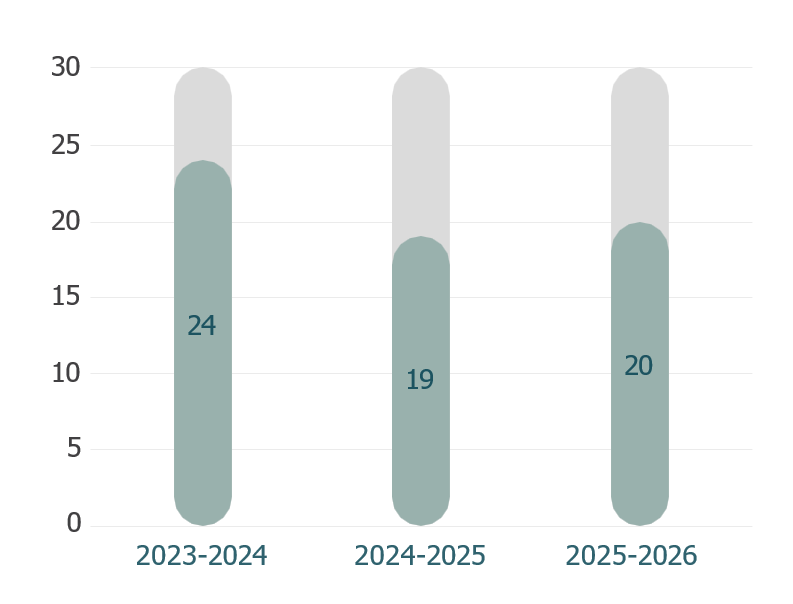
Text version of Days to Issue an Admissibility Decision
- 2023-2024: 24
- 2024-2025: 19
- 2025-2026: 20
Consistently Meeting the Service Standard
Since implementing a 30-day service standard in 2024, the Tribunal has consistently issued admissibility decisions within the established timeline. In 2025–2026, the median time to determine the admissibility of a request was 20 days, which was still well within the 30 day service standard.
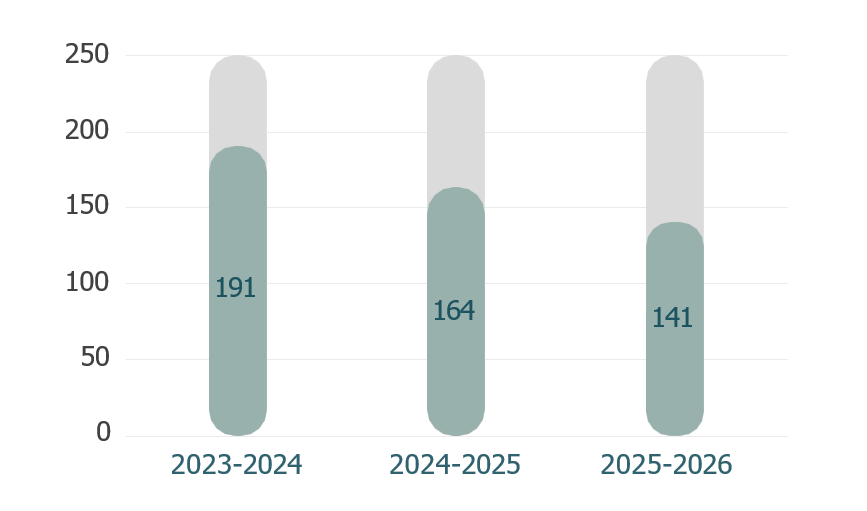
Text version of Days for a Request to Be Heard (Oral Hearing)
- 2023-2024: 191
- 2024-2025: 164
- 2025-2026: 141
Significant Reduction Over Three Years
- The median time for a request to proceed to an oral hearing continued to improve in 2025–2026, decreasing to 141 days, compared to 164 days in 2024–2025 and 191 days in 2023–2024.
- This represents a decrease of 23 days (14%) compared to 2024–2025 and 50 days (26%) compared to 2023–2024.
- CART increased its hearing capacity through improved scheduling and case management practices, resulting in more hearings being held and shorter wait times for parties. These efforts enabled the Tribunal to consistently meet its 150 day service standard for oral hearings.
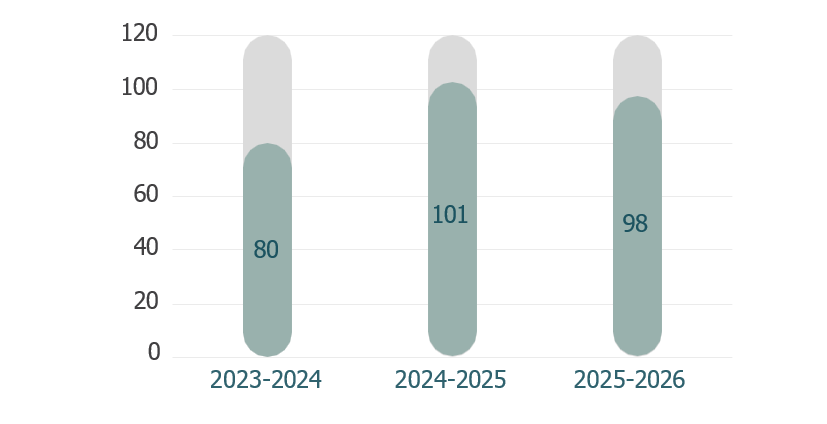
Text version of Days for a Request to Be Heard (Written Submissions)
- 2023-2024: 80
- 2024-2025: 101
- 2025-2026: 98
- The median time for a request to proceed to a written hearing was 98 days in 2025–2026, compared to 101 days in 2024–2025 and 80 days in 2023–2024.
- Although the median remained higher than in 2023–2024, the Tribunal reversed the upward trend observed in 2024–2025 and improved timeliness despite a high level of hearing activity.
- The Tribunal remained close to its 90-day service standard for written hearings.
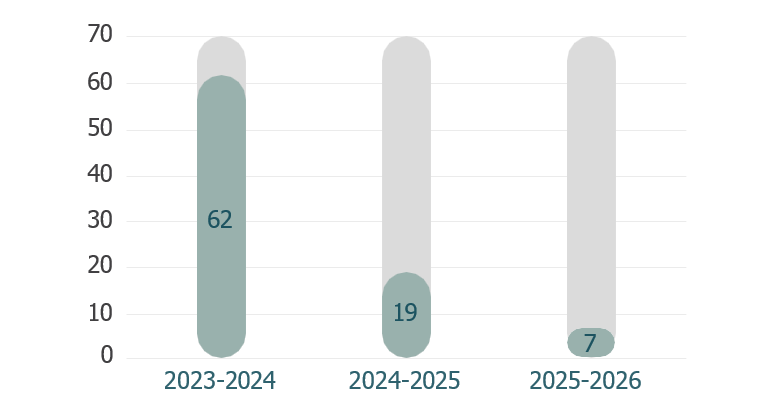
Text version of Days Until a Decision Is Issued Following an Oral Hearing
- 2023-2024: 62
- 2024-2025: 19
- 2025-2026: 7
Significant Improvement
- The Tribunal achieved a significant improvement in the timeliness of its decision making following oral hearings in 2025–2026. The median time to issue a decision was 7 days, well within the 30-day service standard and down from 19 days in 2024–2025 and 62 days in 2023–2024.
- This represents a reduction of 12 days (63%) compared to 2024–2025 and 55 days (89%) compared to 2023–2024.
- The continued improvement in the median time to issue a decision following an oral hearing can be attributed to recent procedural changes adopted by the Tribunal, including the refinement of training materials.
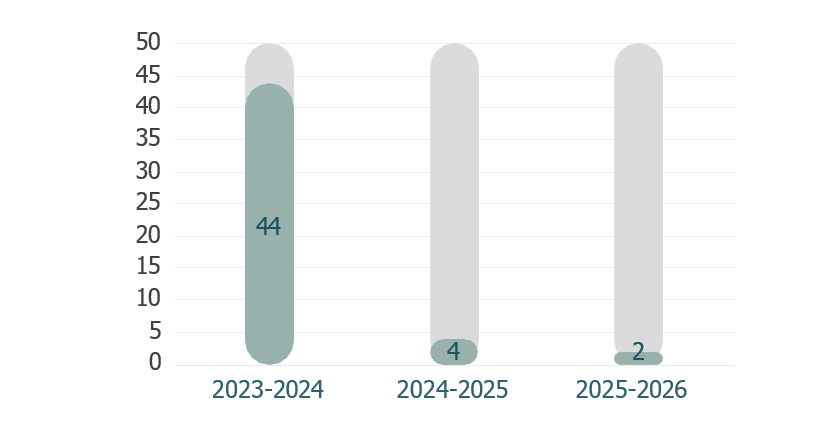
Text version of Days Until a Decision Is Issued Following a Written Hearing
- 2023-2024: 44
- 2024-2025: 4
- 2025-2026: 2
Timeliness in Issuing Decisions
- The Tribunal continued to improve the timeliness of its decision making following written hearings in 2025–2026. The median time to issue a decision was 2 days, well within the 30-day service standard and down from 4 days in 2024–2025 and 44 days in 2023–2024.
- This represents a reduction of 2 days (50%) compared to 2024–2025 and 42 days (95%) compared to 2023–2024.
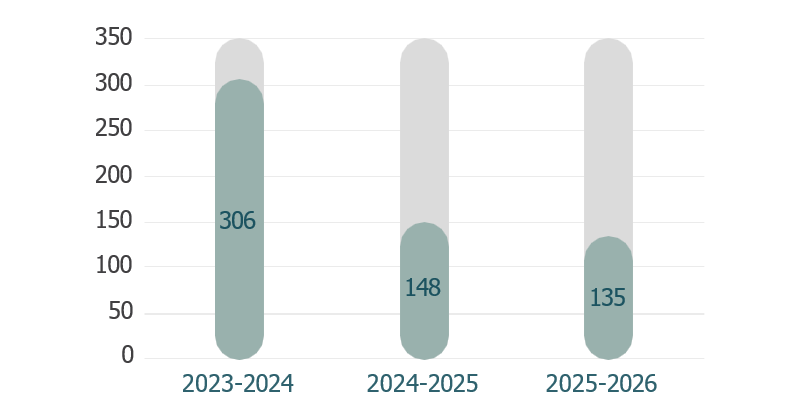
Text version of Time to Close a File
- 2023-2024: 306
- 2024-2025: 148
- 2025-2026: 135
Continued Improvement in Time to Close a File
- The Tribunal continued to improve the overall timeliness of its review process in 2025–2026. The median time to close a file after the initial request was submitted was 135 days, down from 148 days in 2024–2025 and 306 days in 2023–2024.
- This represents a reduction of 13 days (9%) compared to 2024–2025 and 171 days (56%) compared to 2023–2024.
- These results reflect sustained improvements throughout the life cycle of cases, including scheduling hearings more quickly, issuing decisions faster, and managing files more efficiently.
Summary
As expected, thanks to the commitment of both CART’s and the ATSSC’s teams to efficient processes, CART met the vast majority of its service standards in 2025–2026, showing continued growth in the number of files reviewed and reduced timelines to reach milestones in the files’ lifespan.

2025–2026 Initiatives
This year, CART made progress on several initiatives to improve accessibility.
1. Proposed revisions to the Tribunal’s Rules of Procedure
The Tribunal’s Rules of Procedure are outdated and inconsistent with current law, and they create inefficiencies and access barriers. Updates have been proposed to align them with legislation and case law, to reflect the Tribunal’s modernization (for example, virtual hearings and flexible timelines), and to improve accessibility through clearer language and expanded supports.
This year, the Tribunal continued its consultation with key stakeholders on its proposed changes.
This is an ongoing project, and the proposed revisions will ultimately be submitted to the Governor in Council for approval.
2. Update to the Request for Review Form
Under the Agriculture and Agri-Food Administrative Monetary Penalties Act, it is up to the agency that issued the notice of violation to prove its allegations. For this reason, the form to request a Tribunal review was updated to make it clear that applicants are not required to provide a reason for their request.
3. Post hearing survey
A post-hearing survey was launched to gather feedback from parties about their experience with the Tribunal. The survey asks parties questions such as how easy it was to make the request for review and whether they were given enough information about what to expect at the hearing.
4. Addition of UserWay to the CART website
UserWay was added to the CART website. UserWay has a special icon that allows users to adjust a website’s accessibility settings, such as screen reader compatibility, keyboard navigation, and contrast, to make the website easier to use for people with disabilities.
5. Practice note on the use of artificial intelligence (AI)
The Tribunal created a practice note on the use of AI at the Tribunal. The note says that the Tribunal will not use AI to make decisions but that AI may be used to edit or translate decisions. Parties are permitted to use AI at the Tribunal but are cautioned about its use.
Notable Cases
Failure to notify veterinary inspector of a reportable disease
In Universal Ostrich Farms Inc. v Canadian Food Inspection Agency, 2025 CART 44, CART confirmed a notice of violation and penalty against the applicant for failing to immediately notify the nearest veterinary inspector of any fact indicating the presence of a reportable disease.
CART found that there was at least one fact that indicated the presence of avian influenza in the applicant’s birds that should have been reported.
CART also found that the applicant’s attempts to contact veterinarians who were not established to be veterinary inspectors as defined under the Health of Animals Act did not meet the requirement to notify the nearest veterinary inspector.
Failure to personally deliver a notice of quarantine
In Universal Ostrich Farms Inc. v Canadian Food Inspection Agency, 2026 CART 07, CART set aside a notice of violation issued for failing to follow a quarantine notice, finding that the Canadian Food Inspection Agency had failed to personally deliver the notice as required by subsection 91.4(1) of the Health of Animals Regulations (HA Regulations).
Obstructing an investigation
This year, CART was asked to review three notices of violations issued for conduct that amounted to obstructing an investigation conducted by government officials.
Making a false statement to an inspector
In Zecoya Inc. v Health Canada, 2025 CART 33 (Zecoya), CART upheld a notice of violation with penalty issued for making a false statement to a Health Canada inspector. CART determined that the test for providing a false statement under the Pest Control Products Act is objective and does not require proof of intent for the violation to be proven. However, intent may be considered when calculating the amount of the penalty.
In Redfrog Enterprises Ltd. v Minister of Agriculture and Agri-Food Canada, 2026 CART 13, CART confirmed a notice of violation issued for providing a document to an inspector that created a false impression of compliance with the regulatory regime. Applying the same test from Zecoya, CART found that intent was not necessary to establish the violation.
Failing to comply with an inspector’s order
In Zhang v Canadian Food Inspection Agency, 2025 CART 36, CART upheld a notice of violation issued for failing to comply with an inspector’s order to produce her suppliers’ information and information related to the sale of live crabs, as required under the Safe Foods for Canadians Act.
Sufficient bedding to absorb liquid during transport
In Way v Canadian Food Inspection Agency, 2025 CART 16, CART confirmed a notice of violation issued for failing to provide animals with sufficient bedding to absorb liquid during transport, as required by subsection 150(3) of the HA Regulations. CART found that there was compelling and uncontested evidence about the slippery nature of the trailer’s floor and therefore concluded that the applicant had transported animals without sufficient bedding.
Handling animals in any other way that is likely to cause suffering, injury, or death
In Delton Williams Poultry Services Inc. v Canadian Food Inspection Agency, 2026 CART 19, CART upheld a notice of violation issued for handling animals “in any other way that is likely to cause [their] suffering, injury or death”, in violation of paragraph 144(1)(h) of the HA Regulations. CART concluded that moving agitated birds into a loader with driving devices met the test for handling an animal “in any other way” that was likely to cause the animal’s suffering, injury, or death.
Establishing the facts of a violation under the Pest Control Products Act
In Willow Creek Colony Ltd. v Health Canada, 2026 CART 10, CART set aside four notices of violation issued for allegedly using unregistered pest control products and using pest control products that endangered “human health or safety or the environment”, in violation of the Pest Control Products Act.
CART concluded that Health Canada had not proven on a balance of probabilities that the person who used the poisoned bait was the applicant.
Decisions from the Federal Court of Appeal
Federal Court of Appeal will review only final decisions
In Favel Transportation Inc. v Canada (Food Inspection Agency), 2025 FCA 99 at para 5, the Federal Court of Appeal (FCA) confirmed that judicial review of a CART decision may be brought to the FCA only after CART has made a final decision, unless there are exceptional circumstances.
Exercising control over the transportation process can be considered causing transportation
In Laplante Poultry Farms Ltd v Canada (Attorney General), 2025 FCA 155, the FCA found that it was reasonable for CART to conclude that the applicant caused the transportation of animals, as that term is used in section 146 of the HA Regulations, because the applicant exercised control over the transportation process. The FCA also agreed with CART’s conclusion that a chicken purchaser’s liability does not crystallize only at the moment they receive a “transfer of care” document.
Factors relating to the assessment and monitoring of risk during transport are not additional criteria when assessing overcrowding
In Canada (Attorney General) v 1230890 Ontario Limited, 2026 FCA 4, the FCA found that the factors listed under subsection 138.3(1) of the HA Regulations, relating to the assessment and monitoring of risk during the transport of animals, are not additional criteria to be considered when deciding whether an animal has been overcrowded during transport, in violation of subsection 148(2). However, those factors may be relevant when deciding whether an animal is likely to suffer or be injured.
Advisory Committee
CART’s Advisory Committee of external stakeholders helps ensure that CART’s procedures and practices are as fair, accessible, and efficient as possible.
The external members of the 2025–2026 Advisory Committee were:
- Pierre Lampron, Chair of the Advisory Committee, Second Vice-President of the Canadian Federation of Agriculture
- Chris Araujo, Counsel, Legal Services, Canadian Food Inspection Agency
- Jorge Correa, Vice-President, Market Access and Technical Affairs, Canadian Meat Council
- Thomas Enns, Associate General Counsel, Legal Services, Water Security Agency, Government of Saskatchewan
- Sherri-Lynn Foran, Director, Enforcement Appeals and Litigation Division, Canada Border Services Agency
- Jan Holmes, Policy Analyst, Portfolio Coordination Secretariat, Deputy Minister’s Office, Agriculture and Agri-Food Canada
- Vincent Lamontagne, Partner at Richer & Associés Avocats
- Moya McAlister, Communications Manager, National Self-Represented Litigants Project
- Melanie Nobre, Manager, National Enforcement and Investigations Office, Canadian Food Inspection Agency
- Nicolas Palanque, Director, National Enforcement and Investigations Division, Canadian Food Inspection Agency
- Russell Reitsema, Vice-President, BC Young Farmers
- Robert Scriven, Partner, Bennett Grant LLP
- Philippe Tremblay, Director, Enforcement Appeals and Litigation Division, Canada Border Services Agency
- Skyler Veazey, Regulatory and Technical Director, Canadian Poultry & Egg Processors
The Advisory Committee met twice during the 2025–2026 fiscal year. These meetings provided a valuable forum for discussion and collaboration to support CART’s mandate and enhance its operations. Key discussion points included the following:
- Operational processes: Among the operational matters discussed by the Committee were the benefits of holding case management conference calls (CMCCs); with the Committee’s feedback, CART decided to continue offering CMCCs.
- Proposed amendments to CART’s Rules: CART worked with the Advisory Committee’s Rules Subcommittee on proposed changes to its Rules of Procedure, aimed at improving procedural fairness, efficiency, and clarity.
- Artificial Intelligence (AI) policy: The Committee reviewed and provided input on a proposed policy to clarify how AI may be used by parties appearing before the Tribunal and to confirm that AI will not be used by members in drafting their decisions.
These discussions reflect CART’s ongoing commitment to transparency, fairness, and improved service delivery.
Contact Information
CART’s offices are located in the National Capital Region on the traditional unceded territory of the Algonquin Anishinaabe people.
You can contact CART as follows:
- By email:
- infotribunal@cart-crac.gc.ca
- By telephone:
- 613-943-6405
- By fax:
- 613-943-6429
- By mail:
- Canada Agricultural Review Tribunal
235 Queen Street, Room 400
Ottawa, Ontario K1A 0H5
Other ways to stay informed:
- Our website:
- www.cart-crac.gc.ca/
- Our decisions:
- Decisions – Canada Agricultural Review Tribunal
- RSS FEED:
- RSS Feeds - Canada Agricultural Review Tribunal
ISSN 2290-0578 (imprimé, français et anglais)
ISSN 2290-6193 (en ligne, anglais)
ISSN 2290-6207 (en ligne, français)